How Air Filters Trap Dust, Pollen, and Smoke Particles
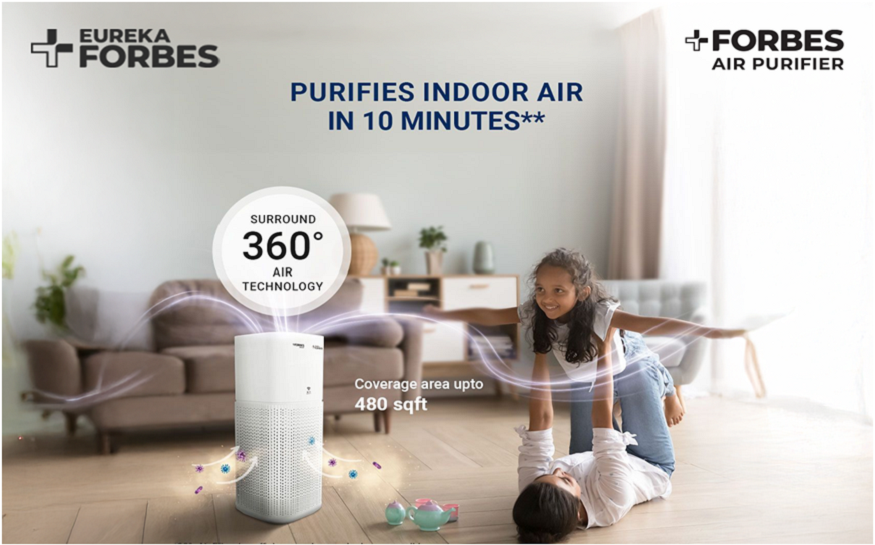
An air filter works by drawing air through layers of fine fibres, where particles get caught in different ways depending on their size. Larger particles like dust are easier to trap, while smaller ones such as pollen and PM2.5 need more precise filtration. Smoke is more complex because it carries both very fine particles and gases.
To handle this mix, advanced systems use multi stage filtration rather than a single layer. Physical processes like impaction, interception and diffusion help trap particles, while technologies such as True HEPA H13 filtration and activated carbon work together to capture both particles and odours. This is what allows an air cleaner to deal with everyday indoor air concerns more effectively. Together, these technologies allow an air cleaner to deal with a much wider range of indoor pollutants.
How Air Filters Trap Different Types of Airborne Particles: Not Everything Floating in the Air Is the Same
● Particle size and behaviour in indoor air
Not everything floating in indoor air behaves the same way. Larger particles tend to settle quickly, while smaller ones can stay suspended for longer and move easily with airflow.
● Why dust, pollen, and smoke need different filtration processes
Dust is relatively heavy and easier to capture. Pollen is finer and stays airborne longer. Smoke is the most difficult because it includes extremely small particles along with gases and odours. This is why a single air filter is rarely enough to manage all indoor pollutants effectively.
Read More: Cold Press Juicer: Why Health Enthusiasts Are Ditching Traditional Juicers in 2026
Herein, modern air purifiers with multi-stage purification technology become a practical choice.
Once air is pulled into the air purifier, it doesn’t pass through one filter and comes straight back out. It moves through a sequence of filtration stages.
- Pre-filter: What is the role of pre filters in capturing larger particles?
The first layer is usually a pre-filter that captures larger particles such as dust, fibres and pet hair. Removing these early helps prevent the finer filters from becoming overloaded too quickly.
- True HEPA H13 filter: How True HEPA H13 filters capture microscopic pollutants?
Next comes True HEPA H13 filtration, which is designed to capture microscopic airborne particles such as fine dust, pollen and other pollutants that are far too small for us to notice during everyday life. Smoke introduces another challenge altogether.
- Activated Carbon: Why activated carbon is needed for smoke and odours?
Besides particles, the air often carries odours and certain gaseous pollutants. That’s where activated carbon filtration becomes important. Instead of trapping particles, activated carbon helps adsorb many of the compounds responsible for lingering smells and certain airborne gases.
None of these technologies replaces the others. Each one contributes to a different stage of the purification process.
The Science Behind Air Filtration: How Particles Get Trapped?
● Impaction for larger particles like dust
Heavier particles cannot follow the airflow around filter fibres. They move straight and collide with the fibres, where they get trapped.
● Interception for medium particles like pollen
Some particles follow the airflow but pass close enough to a fibre to stick to it as they move through the filter.
● Diffusion for fine particles such as smoke and PM2.5
Very small particles don’t move in a straight path. They drift around in a random way, so over time they’re more likely to bump into the filter fibres and get trapped.
Read More: Making Informed Decisions Regarding home electrical repair and commercial electrical services
How Sensors and Airflow Improve Filtration Efficiency?
● PM2.5 sensors and real time air quality detection
Most modern systems come with built-in sensors that track PM2.5 levels in the air. Instead of relying on manual settings, the purifier continuously reads how clean or polluted the air is in real time.
- Automatic fan speed and airflow adjustment
When PM2.5 levels rise, it pushes more air through the filters by increasing the fan speed. Once the air improves, it slows things down again, keeping it efficient without getting unnecessarily noisy.
● Air quality indicators and everyday usability
Many air cleaner models also show real-time air quality through colour-coded lights or digital displays. It’s a simple way to see how indoor air is changing, without having to guess or assume if the air purifier is doing its job.
Understanding the Technology Makes Choosing Easier
Larger dust particles, microscopic pollen, cooking smoke and everyday odours, all behave differently, so they benefit from different purification methods working together. That’s also what separates a basic filtration system from a well-designed air cleaner. It isn’t just about trapping particles. It’s about combining the right technologies to deal with the air people actually live with every day.