India’s Market Compass: Understanding the Twin Pillars Guiding Modern Equity Trading
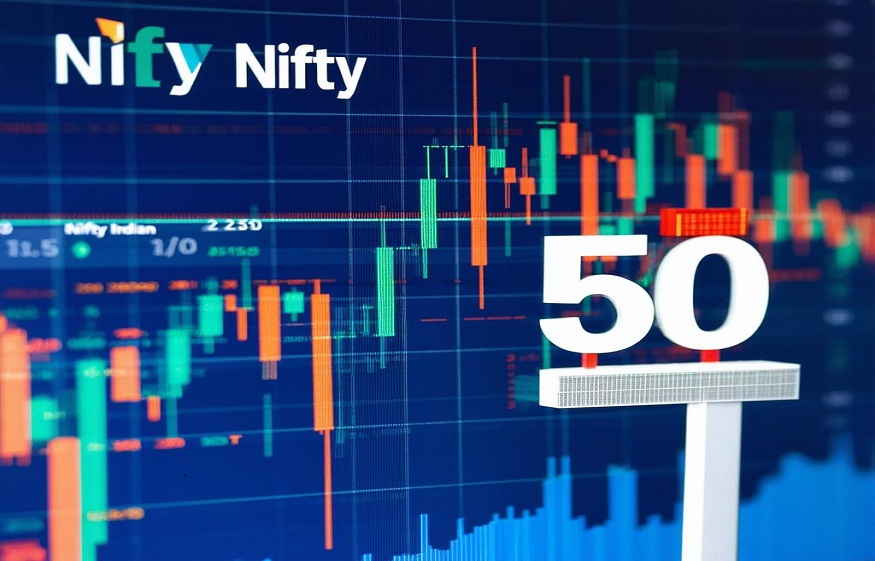
Every morning, before the opening bell rings on Dalal Street, traders and investors across the country reach for the same early signal. They are checking the futures contract traded in Gujarat’s GIFT City — commonly known as GIFT Nifty — to understand how the world has moved overnight and what that means for the index they know as the Nifty 50. These two instruments sit at the very heart of India’s financial ecosystem, connected by the same underlying companies yet separated by purpose, design, and audience. Understanding both is no longer the exclusive domain of institutional traders. For anyone who invests in Indian equities, this knowledge is essential.
The Nifty 50: India’s Blue-Chip Benchmark
The Nifty 50 is the single most extensively diagnosed benchmark for India’s inventory market. It represents the pinnacle 50 agencies indexed at the National Stock Exchange, spanning essential sectors of the financial system such as financial services, information technology, energy, customer items, and healthcare. The index is weighted by means of unfastened-go with the flow market capitalisation, meaning agencies with a larger share of publicly tradable shares convey extra have an effect on over the index’s movement.
Read More: Empowering Global Investors with Robust Trade API Infrastructure
What makes it critical is its function as the reference factor for almost each major investment decision within the Mutual fund managers use it to degree performance. Passive traders song it thru index budget and exchange-traded price range. Policymakers and economists study it as a barometer of corporate India’s fitness. When the market rises or falls, it’s miles this index whose parent gets quoted, analysed, and debated.
Trading inside the home benchmark is performed in Indian rupees, on the National Stock Exchange, from 9:15 AM to three:30 PM IST — a window of simply over six hours. Within that compressed timeframe, billions of rupees exchange fingers, fortunes shift, and the index tells the tale of the way domestic and worldwide forces are shaping India’s biggest agencies on any given day.
From Singapore to GIFT City: How the Offshore Contract Evolved
For over decades, worldwide buyers who desired publicity to Indian equities outside of home buying and selling hours had a unmarried choice — the SGX Nifty, a futures settlement traded at the Singapore Exchange. It served its purpose properly, however it supposed that the liquidity generated via trading India’s benchmark index sat in a overseas jurisdiction, regulated by foreign authorities, and reaping benefits a foreign exchange.
That changed in July 2023. Under a connectivity arrangement between the Singapore Exchange and the NSE, the offshore by-product contract became transitioned from Singapore and relaunched as a product traded at the NSE International Exchange, placed in GIFT City, Gujarat. This move introduced the whole offshore Nifty derivatives environment beneath India’s regulatory umbrella.
The shift centralised trading at NSE IFSC, directing liquidity back to India while enhancing get admission to and boosting performance for buyers in Indian fairness derivatives. It turned into a great announcement of financial sovereignty — India turned into reclaiming possession of a product built on its personal businesses and its very own markets.
How the Offshore Futures Contract Actually Works
The contracts are USD-denominated futures settled in dollars, traded at the NSE International Exchange in GIFT City, Gujarat. They are designed normally for non-resident traders, international institutional participants, and eligible overseas entities, even as Indian retail investors are constrained from collaborating underneath cutting-edge foreign exchange regulations.
The product’s most one of a kind feature is its fantastic buying and selling window. It operates for approximately 21 hours a day, break up into periods: the first runs from 6:30 AM to a few:40 PM IST, and the second one from 4:35 PM to two:forty five AM IST the subsequent morning. This structure is deliberate and strategically designed to overlap with every predominant worldwide buying and selling session — Asian markets inside the morning, European markets within the afternoon, and American markets via the night.
For eligible foreign traders, the device also offers compelling tax advantages. Under modern IFSC policies, overseas portfolio traders revel in zero capital gains tax on income, along side exemptions from securities transaction tax and items and offerings tax. This makes it an attractive gateway for international capital in search of exposure to India’s growth tale.
The Pre-Market Signal That Moves Markets
For home buyers, the most realistic significance of the offshore futures contract lies in its function as a pre-market indicator. It expenses in international shocks — which include Federal Reserve rate selections, geopolitical occasions, or sharp actions on Wall Street — long earlier than the 9:15 AM beginning bell sounds in Mumbai, acting as the number one fee-discovery engine for India earlier than the home market opens.
If the settlement rises in a single day, the Indian market may open with a gap-up. If it falls sharply in reaction to a worldwide occasion, investors put together for an opening-down opening. Major activities along with US inflation records, hobby rate adjustments, or geopolitical trends impact in a single day expenses right now, and people alerts ripple into home markets at open.
However, it’s miles important to treat this as a trademark, not a guarantee. Domestic-precise elements — profits announcements, Reserve Bank of India decisions, authorities policy statements, or quarter-specific news — can override in a single day cues absolutely as soon as Indian trading starts offevolved.
Two Instruments, One Interconnected Ecosystem
The courting among the domestic benchmark index and its offshore futures counterpart is first-rate understood as complementary rather than aggressive. While the domestic index is traded in India at some point of Indian marketplace hours, the offshore futures contract acts as a global market indicator, bridging the time hole among international periods and the Indian trading day.
In May 2025, the offshore settlement set a report month-to-month turnover of over US$102 billion, with more than million contracts traded in that month on my own — underscoring the developing worldwide urge for food for India-linked spinoff exposure. These numbers replicate how significantly global institutional buyers take the Indian equity tale.
For the man or woman investor sitting in India, the practical takeaway is apparent. You might not be able to trade the offshore futures contract without delay, however ignoring its actions before the market opens is a ignored opportunity. Watching in which it stands at 6:30 AM — and information what global activities drove that level in a single day — gives you a meaningful side in interpreting the day’s probably marketplace route.
Why This Knowledge Matters for Every Investor
India’s economic markets not operate in isolation. Every fee decision by means of the US Federal Reserve, every flash of geopolitical anxiety, each surge or sell-off on Wall Street reverberates thru the costs that form earlier than 9:15 AM. The offshore futures contract is the transmission mechanism through which those worldwide forces speak to Indian markets.
At the same time, the home benchmark index stays the truest long-term mirrored image of India’s company electricity and financial trajectory. For affected person investors building wealth over years and a long time, it stays the remaining scorecard.
Read More: All About International eSIMs: The Smartest Travel Upgrade
Together, those two units — one rooted in India’s regulated home change, the opposite working around the clock from GIFT City’s worldwide financial hub — define the total photograph of ways present day Indian fairness markets feature. Understanding each, in my view and in terms of each different, is the muse of informed making an investment in latest globally connected economic international.