Empowering Global Investors with Robust Trade API Infrastructure
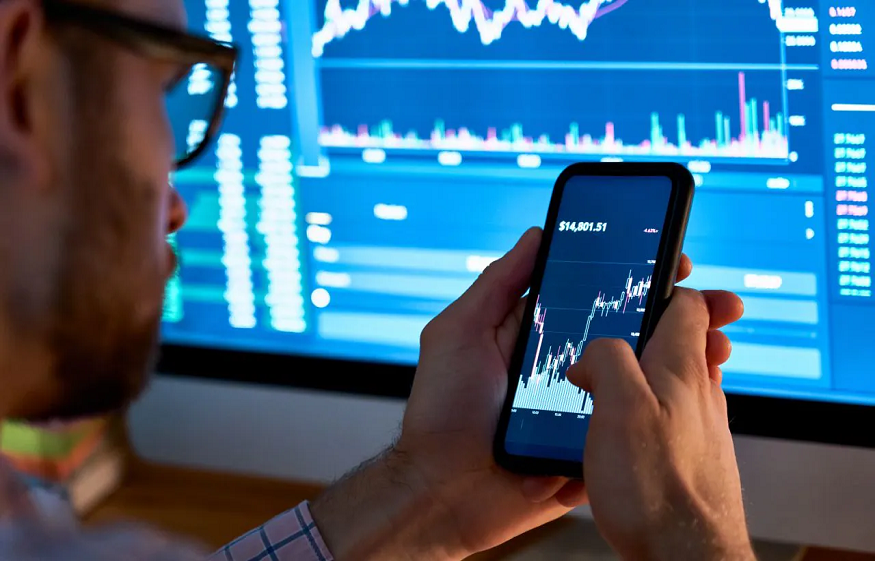
The evolution of digital finance has transformed the way market participants interact with global exchanges, implementing a high-performance Trade API as a cornerstone for any modern investment platform. These interfaces serve as the critical digital bridge between a front-end user application and the complex execution engines of the financial markets, allowing for the rapid transmission of buy and sell orders. In the fast-paced environment of 2025, where volatility can create opportunities in milliseconds, a reliable Stock Trading API ensures that retail and institutional traders alike can access live price feeds and manage their portfolios with precision. By abstracting the heavy lifting of exchange connectivity, these tools enable developers to focus on creating unique user experiences and sophisticated analytical tools that cater to a global audience.
The Role of Real-Time Data and Connectivity
At the coronary heart of each successful trading utility is the capacity to process huge amounts of facts with out lag. Modern interfaces make use of WebSocket generation to push live market updates without delay to the purchaser, replacing the inefficient polling strategies of the past. This consistent movement of information includes not just modern fees, but also order book depth, ancient candles, and real-time information sentiments. By integrating these fact points, platforms can offer a holistic view of marketplace dynamics, empowering users to make informed selections primarily based on the latest to be had information. High-pace connectivity is not an optional luxury; it’s miles the fundamental requirement for preserving a competitive part in a technology dominated by using digital execution.
Streamlining Order Execution and Management
Beyond simple fact retrieval, the primary function of that programmatic equipment is the stable and efficient routing of orders. Developers can implement complex common sense that automatically handles numerous order types—along with limit, stop-loss, or trailing stops—directly through the interface. This automation reduces the danger of human error and guarantees that trades are completed at the finest fee points defined via the consumer’s approach. Furthermore, the potential to programmatically cancel or modify orders in response to changing market conditions allows for a degree of agility that guides buying and selling, which cannot be healthy. This technical synergy between the platform and the trade creates a continuing environment wherein the user’s cause is translated into movement with minimum friction.
Security Protocols and Compliance Standards
In a landscape where economic safety is paramount, modern integrations are constructed with a couple of layers of protection to safeguard user property and data. Industry-wide protocols consisting of OAuth 2. 0 and Mutual TLS (mTLS) at the moment are the baseline for authentication, ensuring that handiest authorized entities can interact with the buying and selling middle. Additionally, the rise of “Zero Trust” architecture means that each request is exactly confirmed, even within the platform’s inner network. Regulatory compliance is also a first-rate motive force of innovation; these systems often comprise automatic KYC exams and real-time risk management audits to make sure that every transaction adheres to the criminal necessities of the jurisdictions in which they perform.
Technical Excellence in Modern Stock Trading API Integration
Designing an institutional-grade funding software calls for a deep technical understanding of ways a Stock API integrates into an allotted microservices architecture to offer balance and low latency. This integration manner involves more than simply connecting to an endpoint; it requires building a resilient system able to deal with heaps of concurrent requests even as maintaining a correct ledger of person positions and balances. Simultaneously, the choice of an incredible API company is a strategic decision that impacts the platform’s scalability, as the selected companion must offer consistent uptime and broad insurance throughout diverse asset instructions and global areas. By prioritizing technical excellence in these integrations, corporations can provide a reliable environment that fosters consideration amongst long-term investors and lengthy-time period buyers.
Architecting for Scalability and Resilience
As a buying and selling platform grows, its underlying infrastructure has to be capable of scaling horizontally to satisfy the needs of an expanding user base. This is often accomplished by deploying the API services inside containerised environments like Kubernetes, making allowance for dynamic resource allocation throughout periods of intense marketplace activity. Resilience is similarly crucial; a sturdy device ought to feature circuit breakers and failover mechanisms to save you a unmarried point of failure from disrupting the entire platform. By imposing message queues to decouple the order access manner from the agreement logic, developers can make certain that the machine remains responsive, although a selected downstream carrier reports a transient delay.
Minimising Latency for High-Frequency Strategies
In the arena of professional buying and selling, the speed of execution is often the distinction between a worthwhile change and a neglected possibility. To obtain the lowest possible latency, many builders opt for C or Rust-based execution engines that interface with the exchange via the FIX (Financial Information eXchange) protocol. For retail-targeted systems, optimising the JSON payload length and using aspect computing can notably lessen the “spherical-experience” time for a change. Reducing these milliseconds is crucial for assisting algorithmic strategies, consisting of arbitrage or trend-following, wherein the platform should react to fee adjustments faster than a human operator may want to perceive them.
The Future of Programmatic Wealth Management
The next frontier for these technological interfaces lies in the integration of artificial intelligence and system learning. We are moving in the direction of a future wherein the API no longer simply execute orders but also gives wise insights, consisting of predictive risk modelling or automated portfolio rebalancing based on personal goals. These “smart” integrations permit the introduction of hyper-customised economic advisors that work across the clock to optimise a person’s wealth. As we approach the latter half of the last decade, the capacity to programmatically access and manage financial markets will become the norm for all kinds of investment, democratizing access to the equipment and strategies that were once the extraordinary area of the sector’s biggest hedge fund managers.