How to Add a Graffiti Workshop to a City Trip
A city trip can be more than sightseeing
A weekend away often follows a familiar pattern: arrive, explore the centre, visit a few attractions, find somewhere to eat and move on to the next stop. That works well, but many travellers now look for activities that allow them to do something rather than simply see something. A graffiti workshop fits naturally into that kind of city break because it combines local culture, creativity and a practical experience that can be shared by a group.
The format is particularly useful for people travelling together. Friends, colleagues, students and families can build a workshop into a day without needing to make the entire trip about graffiti. It can sit between sightseeing and dinner, become part of a team programme or provide a creative break from a packed schedule.
Why a graffiti workshop works well on a city trip
Graffiti is strongly connected to urban environments, so the subject already belongs naturally within many city destinations. Amsterdam, Utrecht, Berlin, Paris, London and Barcelona all have different relationships with graffiti and street art. A workshop gives visitors an opportunity to understand that visual culture from a practical perspective instead of only photographing finished walls.
Read More: A Little Golden Detail that Tells your Story: Celebrate Yourself with Stylish Gold Nose Pins
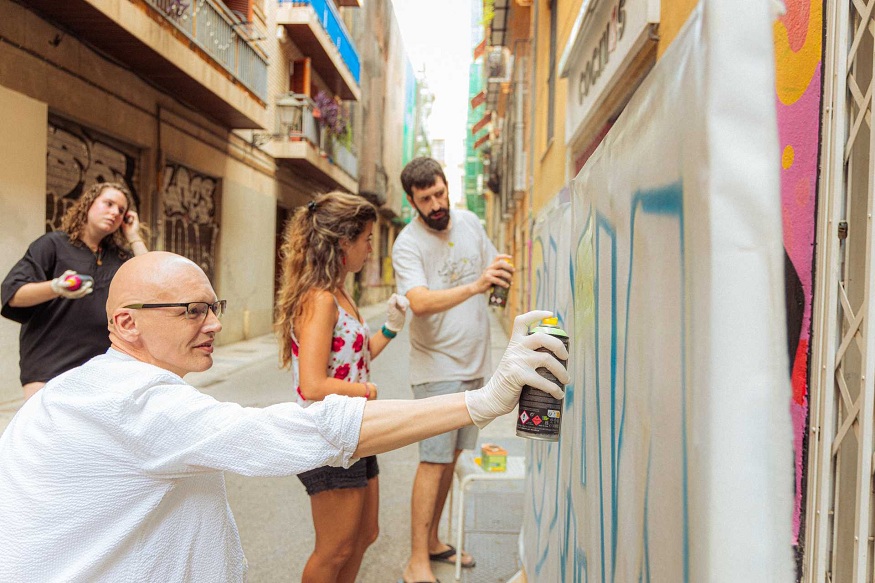
The hands-on element also makes the experience accessible. Most participants do not need previous drawing experience. They learn the basics of spray-painting, lettering and colour during the session, then use those techniques to create a personal piece. The result can be very different for every participant, which keeps the activity interesting even within a larger group.
Where to place a workshop in a travel itinerary
A workshop does not necessarily need to be the first activity of the day. For many groups, it works particularly well after a morning of sightseeing, when people have already experienced the city and are ready to do something more active. It can also work in the afternoon before dinner, providing a clear transition from sightseeing to the evening programme.
The best timing depends on the group and the destination. A school group may build the workshop into an educational city visit, while a company may place it between a meeting and a group dinner. Families might prefer a daytime session that leaves enough time for other attractions.
Choosing between a local workshop and a mobile activity
One of the practical advantages of graffiti workshops is that they do not always require a traditional event venue. A provider may have a dedicated graffiti location, or the workshop can be organised at a suitable location for the group. This can be especially useful for travel planners because the activity can sometimes fit into an existing programme rather than requiring a separate venue.
From Utrecht, Graffitiworld organises graffiti workshops throughout the Netherlands, including activities in cities such as Amsterdam and Rotterdam as well as at locations provided by companies, schools and other groups. Its current programme includes workshops, creative events and mural projects, which means the format can be adapted to different types of groups.
What participants actually do
A graffiti workshop normally starts with an introduction to the art form and the basic techniques. Participants learn how the spray can behaves, how distance and movement influence the line and how different parts of a piece can be built up in layers. Lettering is often an important part of the process because it gives everyone a clear structure from which to start.
After the technical introduction, participants move towards their own designs. This can involve sketching, selecting colours and deciding how the final composition should look. The physical painting stage then becomes a translation from idea to finished image. For travellers, that progression is one of the strongest parts of the experience because the end result is connected directly to something they did during the trip.
Why it works especially well for groups
Travel groups do not always have the same interests. One person may want museums, another may prefer food, and someone else may be interested in nightlife or sports. A creative workshop can provide common ground because participation does not depend on already sharing a specific hobby.
Graffiti also avoids some of the pressure associated with competitive group activities. People can work at their own level and still contribute to a shared experience. Some will focus heavily on lettering, while others will experiment with colour or visual effects. The variety becomes part of the attraction rather than a problem that needs to be solved.
A workshop creates a physical memory of the trip
Photographs are an obvious part of modern travel, but a creative activity provides something different: a physical result that was made during the journey. The artwork does not need to be perfect to have value. Its importance comes from the fact that the participant remembers making it, learning the technique and seeing the blank surface change.
This can make graffiti particularly suitable for birthdays, group trips, business travel and school visits. The finished artwork becomes a reminder of the experience, while the process itself becomes part of the story that participants share afterwards.
Graffiti and the character of different cities
A workshop should not necessarily feel identical in every destination. The surrounding city can influence the way the activity is presented. In a city with a strong street-art scene, the workshop can be connected to local urban culture and the kinds of graffiti visitors see while walking around. Elsewhere, the emphasis may be more strongly placed on the practical art experience.
This local connection makes the activity more interesting than a generic painting session. The subject is tied to something visitors can actually see in the streets around them, which gives the workshop a clear place within the wider travel experience.
What makes a good graffiti workshop for travellers
For a travel group, practical organisation matters almost as much as the creative content. Clear timings, appropriate equipment, experienced guidance and a location that is easy to reach can determine whether the activity fits smoothly into a city itinerary. The group should also know roughly what the session involves so that participants arrive prepared to take part.
Graffiti workshop information explains that its workshops are available for different types of groups, with materials included and professional artists providing guidance. The organisation operates from Utrecht and has a wider Netherlands and European working area, allowing activities to be delivered in different settings rather than being limited to one fixed destination.
Combining graffiti with other city activities
A graffiti workshop does not need to stand alone. It can be combined with an urban walking route, street-art sightseeing, a museum visit, a group lunch or an evening event. This can create a fuller programme in which the workshop becomes the active part of a day that also contains cultural and social activities.
For travel planners, that flexibility is useful because different people in a group can have different reasons for enjoying the trip. The workshop provides a shared activity without requiring the rest of the itinerary to revolve around the same theme.
The difference between seeing graffiti and making it
The most interesting change happens when visitors move from observation to participation. A wall covered in graffiti can look simple until someone tries to reproduce even a small part of the technique. The spray can reacts to movement, the surface affects the result and the design has to work at a different scale from the original sketch.
That experience can also change how visitors look at street art afterwards. They notice lettering, outlines, colour choices and scale more readily because they have experienced some of the same decisions themselves. The workshop therefore adds a learning component to the trip without turning the activity into a formal class.
Why this type of activity is becoming more popular
Travel has increasingly shifted towards experiences that combine place and participation. People want to eat local food, meet local makers, explore neighbourhoods and take part in activities that would not be the same in another destination. Graffiti fits this model because it is tied strongly to the visual identity of cities but is still accessible to first-time participants.
Read More: How to Add a Graffiti Workshop to a City Trip
The activity can also scale easily. A small group can work closely with one artist, while larger groups can be divided into several workshop groups. That makes the format suitable for very different types of travel, from a weekend with friends to an organised company trip or educational excursion.
Making a city trip more memorable
A successful city trip does not necessarily require another major attraction. Sometimes one unusual shared activity is enough to change how the whole journey is remembered. A graffiti workshop provides that kind of moment because it combines a new skill, a group experience and a physical result.
For travellers interested in something beyond a standard sightseeing itinerary, a graffiti workshop offers a direct way to experience an element of urban culture. Graffitiworld combines this practical approach with workshops for groups, creative events and street-art projects, allowing the activity to fit into different travel programmes.
Seen this way, graffiti is not simply something to photograph while walking through a city. It can also become something visitors learn, create and take home as part of the journey.